

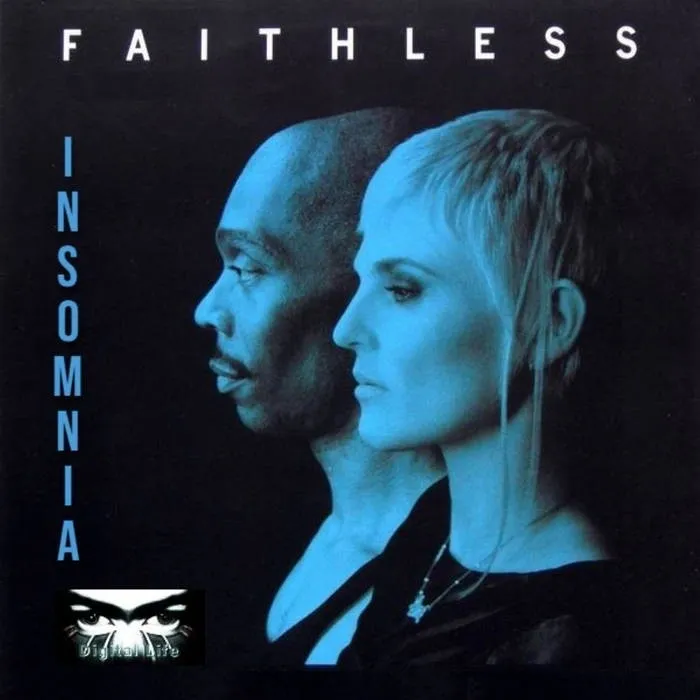
The Making of Insomnia – Faithless’ ‘Accidental’ Anthem
Few tracks define an era like Insomnia by Faithless. A dark, hypnotic masterpiece with no hook, no chorus, and a structure that defied convention, it became one of the most iconic electronic tracks of all time. But Insomnia was never meant to be a hit. In fact, it almost didn’t happen at all.
(Just listen to this for the piano)
I recently watched a documentary on the making of Insomnia, and it revealed just how unconventional its creation was. I also caught a short interview with Sister Bliss—Faithless’ legendary producer and keyboardist—who, as always, was articulate and insightful.
Here’s the story of how Insomnia went from a late-night studio session to a track that still shakes dancefloors decades later.
“We’re Doing a Tune—It’s Gonna Be Called Insomnia”
The name Faithless came about almost by accident, in an interview with Maxi Jazz. But the track itself? That was pure sleep deprivation.
Sister Bliss couldn’t sleep. At all. One night, she walked into the studio and declared, “We’re doing a tune—it’s gonna be called Insomnia, because I can’t sleep.”
That restless energy became the heartbeat of the track. Insomnia wasn’t written for radio. It didn’t follow the rules. No hook. No chorus. Just that brooding bassline, a slow breakdown in the middle, and Maxi Jazz’s deep, hypnotic spoken-word delivery.
It wasn’t the hands-in-the-air trance anthem we now associate with Insomnia. The first version, the Moody Mix, was darker and more underground. But it didn’t immediately connect with people.
The Struggle to Make Insomnia Work
Despite the talent behind it—Rollo, Sister Bliss, and Maxi Jazz—Insomnia wasn’t an instant hit. Labels weren’t convinced. The industry didn’t know what to do with it.
To push it out, Faithless put a full band together for the album release. Their sound was so eclectic that when they performed live, they had to play Insomnia twice—once at the start and once at the end—just to reassure the audience they were watching the right band.
It’s a trick similar to what psychologists found in The Power of Habit with OutKast’s Hey Ya!—sometimes people need to hear something a few times before they realize they like it.
Then came the Insomnia that we all know today: the Monster Mix. That version, with its epic trance breakdown, pushed it into the stratosphere.
3 People, 1 Huge Sound
Sister Bliss reflected on how Insomnia proved that three people—just a producer, a rapper, and a visionary—could make an enormous impact.
Faithless wasn’t just about Insomnia, though. They broke boundaries with every album, releasing tracks for younger generations just like films get remade for new audiences. Their music had a cinematic quality, something Sister Bliss has always credited to their love of film scores. She even mentioned Blade Runner as an influence—another timeless classic that shaped their sonic landscape.
An Accidental Classic
Insomnia was never meant to be a global anthem. It was born from frustration, built on instinct, and reshaped by necessity. But somehow, that restless, late-night energy became something bigger—something legendary.
Even today, when the first notes drop in a club, you know exactly what’s coming. You don’t need a hook. You don’t need a chorus. You just feel it.
And that’s the magic of Insomnia.
What do you think?
- What other accidental anthems do you know of?
- Do you think electronic music today still takes risks like Insomnia did?
Let’s not forget Salva Mea:

No Comments